
#09 How to Build a Super Brain, with Giuliano Milan
Program: 220 Podcast (high performance, health, and productivity) | Host: Taiana D’Egmont | Guest: Giuliano Milan | Published: May 4, 2023
Why Walk Away from a Promising Career?
Taiana opened by recalling that Giuliano graduated in Business Administration from FGV and had a promising corporate career. He had even shared an office with someone who would later become president of Procter & Gamble for Latin America. She asked why he had chosen a different path. Giuliano said the turning point came in college, when he noticed high-achieving people whose quality of life was suffering.
“I saw many people at Fundação Getulio Vargas and other universities who were highly stressed and anxious, and sometimes not particularly happy. I thought: I don’t want to reach 40 as someone who is unhappy but very successful and wealthy. I want to be happy, successful, and financially comfortable.”
He observed that this model of sacrificing everything for success remains common decades later.
“We still use this model of killing ourselves, sacrificing ourselves to reach the top. It isn’t always sustainable, because the price of reaching that summit can be very high in terms of health and being absent from our children’s upbringing.”
Where His Interest in Creativity and Meditation Began
Giuliano returned to a book he had mentioned in other interviews, Creativity in Business, written by two Stanford professors, as a pivotal influence on his career.
“I found it fascinating that a university would offer a class in creativity. Did that exist back then? I don’t even know whether Brazilian business schools offer a creativity course today.”
He described beginning to study meditation at a time when there was far less scientific research available and the practice was strongly associated with religious traditions.
“I had to explore all those different areas to find what I was looking for: ways to manage stress and anxiety through meditation and deeper relaxation, without requiring ideologies or beliefs that can sometimes be conflicting or limiting.”
“Today I use meditation as a central tool in my work with people. But it is meditation without a religious requirement. My clients include Jewish people, atheists, Catholics, and Protestants.”
How the Mentoring Process Works
Asked how he begins working with a new client, Giuliano explained that he accepts no more than 15 people for individual mentoring, which helps explain why many of his clients are well-known figures.
“They go through weekly sessions in which I get to know the client, understand their background through the lens of my methodology, and gradually introduce techniques. Bruninho has worked with me since 2012. That means ten years of talking at least once a week, for at least an hour.”
Understanding the Brain: The Most Powerful Machine There Is
Taiana asked Giuliano to explain the thinking behind his method in more technical terms. He described the brain as an extraordinarily powerful machine whose original purpose is survival rather than quality of life.
“Your brain has an inherent mission to keep you alive at any cost. Think about what that means across millions of years of neurological evolution.”
He returned to the metaphor of the brain as an onion: older, deeper structures, shared with other species, coexist with the much more recent neocortex.
“That reptilian brain has had 400 or 500 million years to develop. Our neocortex is only about 200,000 years old. It’s a baby, and it might even disappear. One scientist points out that a species tested on Earth for 200,000 years is not guaranteed to survive; other species have existed for millions of years.”
He highlighted the amygdala and referenced physician Srinivasan Pillay, contrasting what he described as the speeds of unconscious and conscious processing.
“The amygdala specializes in scanning for fear 24 hours a day. The unconscious brain operates in about 20 to 40 milliseconds. The neocortex, which is having this conversation with you, operates at around 400 milliseconds, ten times more slowly.”
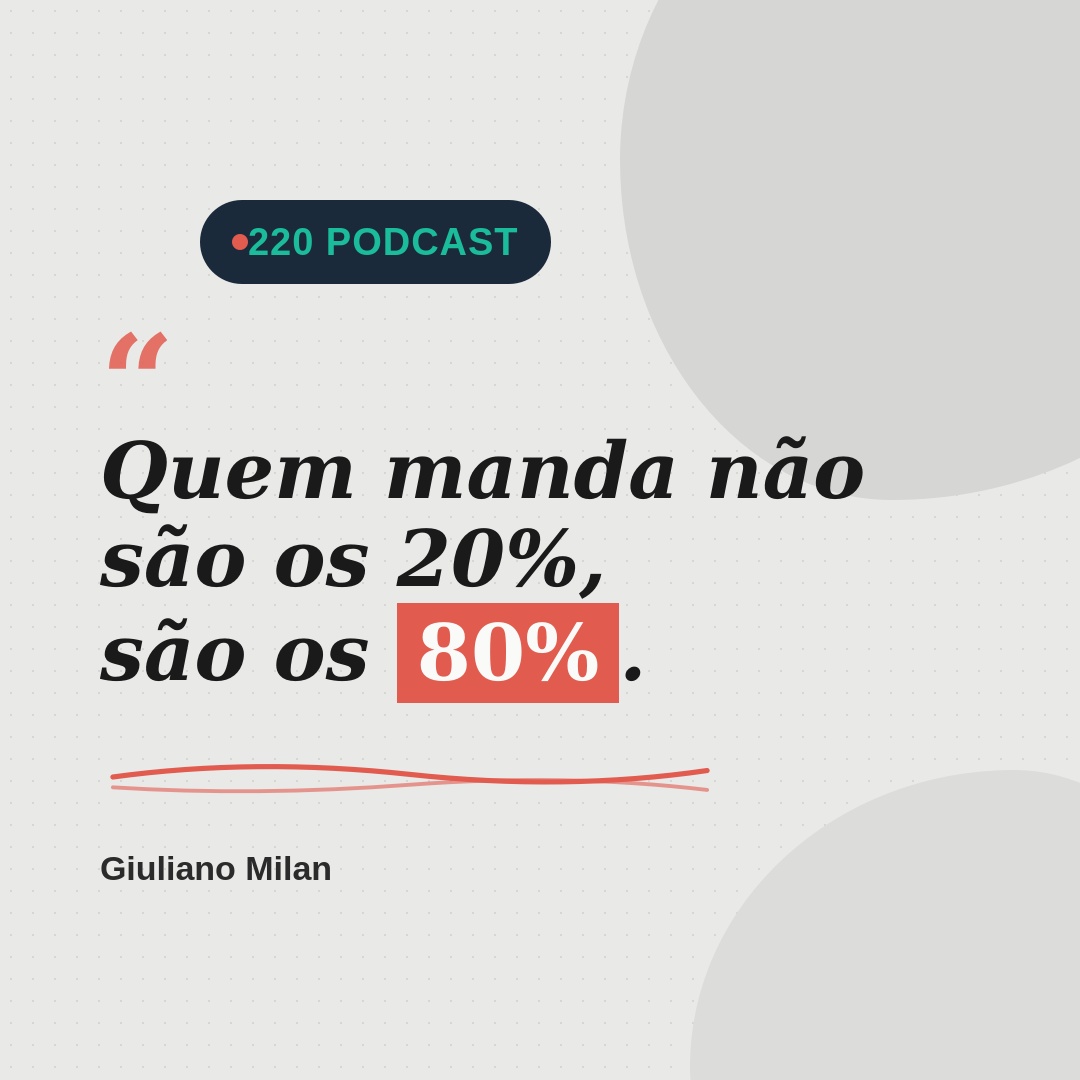
“We are much more unconscious than conscious. Eighty percent of our brain operates automatically, drawing on millions of years of evolution, and only the neocortex, the other 20 percent, is talking to you right now. So the 80 percent is really in charge.”
How the Amygdala Responds to Modern Environments
Giuliano explained that loud sounds, strong smells, and images, whether real or imagined, can activate threat responses. He connected this to corporate interest in neuroarchitecture.
“Look at modern offices, like Google’s headquarters in San Francisco. There is nature, a stream flowing underneath, trees. It almost looks like a Disney setting. They know that this helps calm the unconscious brain.”
He also described three possible responses to threat, freezing, fleeing, and fighting, and how these can affect people at work.
“When you’re afraid your boss might fire you, your amygdala activates, because it interprets everything in terms of life or death. It doesn’t understand the subtleties of a corporate relationship.”
Why Stress and Anxiety Undermine Performance
Giuliano described chronic stress as a major enemy of performance and discussed why extreme pressure can interfere with abilities that an athlete has already mastered. He referred to Bruno Rezende as an example.
“When the brain is afraid, it shuts down parts of the neocortex and reduces certain functions, because it is preparing you to fight or run. Your creativity declines, and so does your ability to make connections.”
“Why does a swimmer or gymnast who has won gold medals at world championships reach the Olympics, the most important competition, and suddenly fall or make a major mistake? They know how to do it, but very high anxiety and stress consume performance. And that applies to all of us, not only athletes.”
He returned to the idea that mental training cannot be confined to one context.
“As Bruno always says, the brain I play with is the same brain I have off the court. When I help that brain become more positive and calmer throughout the day, Bruno is also calmer with his friends, more considerate, and more human.”
Why the Brain Focuses on Negativity
Citing psychologist Rick Hanson, author of Buddha’s Brain, Giuliano discussed the human tendency to prioritize negative experiences as an evolutionary advantage in dangerous environments.
“He explains why our brain is so attracted to negativity: survival. If our tribe finds a mango tree, the sugar matters, but it may not be vital. The brain might forget that tree. But if a cliff collapses near the tribe, or someone eats a poisonous plant, it will never forget.”
What Successful People Have in Common
Asked what he sees among high-performing clients, Giuliano identified courage, purpose, and curiosity.
“They have a great deal of courage, purpose, and curiosity. They are open to new things. They don’t think they already know everything. They are humble, interested people who ask questions.”
He added that unmanaged fear can paralyze business leaders facing decisions such as entering a new market or expanding a company.
“If you don’t know how to manage that fear inside yourself, it will paralyze you as an entrepreneur.”
Tools for Building a Super Brain: Meditation and Music
Asked which tools he uses to help move the brain toward a more positive state, Giuliano described meditation as his most effective practice and emphasized music as another useful element.
“Music is one of the things that can help quiet the amygdala. It comes through the thalamus, which processes the environment in 30 or 40 milliseconds, and reaches the amygdala.”
He mentioned two music albums released during the pandemic and available on Spotify and Deezer, Positivo Sua Mente: Meditação and Lounge.
“I’ve used it with my children since they were born, even during pregnancy, playing it for them in the womb. The music is very calm, with few instruments. When my daughters are playing, I leave it on continuously because I notice they argue less and seem calmer.”
The Breath-Counting Exercise
As in other interviews, Giuliano demonstrated the exercise he considers an entry point to meditation. He said Bruno Rezende spent eight months preparing before he was able to meditate in the way Giuliano intended.
“Count your breaths at your own pace: inhale, exhale, one; inhale, exhale, two, until you reach ten. If you lose count because you remember something, go back to zero. You are building a neural pathway for focus.”
He described former XP partner Betina Roxo, who had believed she could not meditate, as someone who experienced rapid improvements with his approach.
“She told me, ‘Giuliano, I’ve tried every method and none worked. Meditation isn’t for me.’ I said, ‘Give me a chance. Come with me.’ Later she said, ‘I leave feeling almost anesthetized. It’s as if the surroundings have different colors, everything slows down, and I become more creative.’ She had insomnia, and her sleep improved.”
He also offered an important caution about meditation without professional support.
“Meditation is not recommended for 100 percent of the population. There are people with schizophrenia and other mental illnesses for whom it may not be appropriate. Meditation can even intensify symptoms.”
The Importance of Early Childhood
Giuliano connected brain development during the first five years of life with the way adults respond to stress.
“Almost two-thirds of a baby’s brain will be shaped in the first five years. Children who grow up in more dysfunctional, toxic, or aggressive homes may react much more strongly if someone claps while they are asleep. Amygdala activation isn’t just about the stimulus; it also depends on that person’s history.”
He again recommended Edith Eger’s book The Choice, arguing that even wealthy households can lack emotional presence and care.
“Even families that appear loving and perfect, including wealthy ones, sometimes fail to create a truly welcoming, attentive environment. Money has nothing to do with emotional care in early childhood.”
Mental Health as an Umbrella
Discussing therapy, Giuliano reiterated his view that no single intervention is enough.
“You can’t talk about mental health without talking about meditation. You also need physical exercise. The WHO talks about five to six hours a week. Without that, I lose mental and emotional health, and I can’t simply replace it with medication or therapy. It doesn’t work like that.”
He also identified sleep as an early indicator of mental and emotional difficulties.
“Sleep is a useful early warning sign of mental and emotional illness. Sleeping five hours a night isn’t healthy, even though we sometimes see people celebrating it.”
What Companies Get Wrong About Well-Being
Asked why corporate well-being benefits, such as subsidized therapy and gym memberships, often have low participation, Giuliano compared the problem to the lack of nutrition education in the past.
“When you tell people they need better mental and emotional health, they may be confused: where do I go, where do I start? There’s no point offering everyone a therapy benefit worth R$400 per session if only one percent use it, because you haven’t shown them why it matters.”
He criticized excessive working hours as counterproductive to creativity.
“A 14-hour workday makes people less capable of thinking clearly. Of course they can produce things. Even enslaved people produced under threat of death. But that is diminished, mechanical output, not creative work. You won’t achieve major breakthroughs that way.”
Instead, he advocated flexible schedules and visible commitment to well-being from leadership. He cited a startup founder who blocked a recurring therapy appointment on a calendar visible to the team.
“When others see that he has set aside that time, they think, ‘He does this too. Maybe it could be important for me.’”
Closing
At the end of the conversation, Giuliano again mentioned his meditation music albums on Spotify and Deezer, the Positivo Sua Mente YouTube channel created with Bruno Rezende during the pandemic, and his Instagram, LinkedIn, and Facebook profiles.
This interview aired on 220 Podcast, hosted by Taiana D’Egmont. Guest: Giuliano Milan, creator of the Milan Method for Building Presence. For more than two decades, he has translated contemplative practices into practical tools for clarity, presence, and performance under pressure.