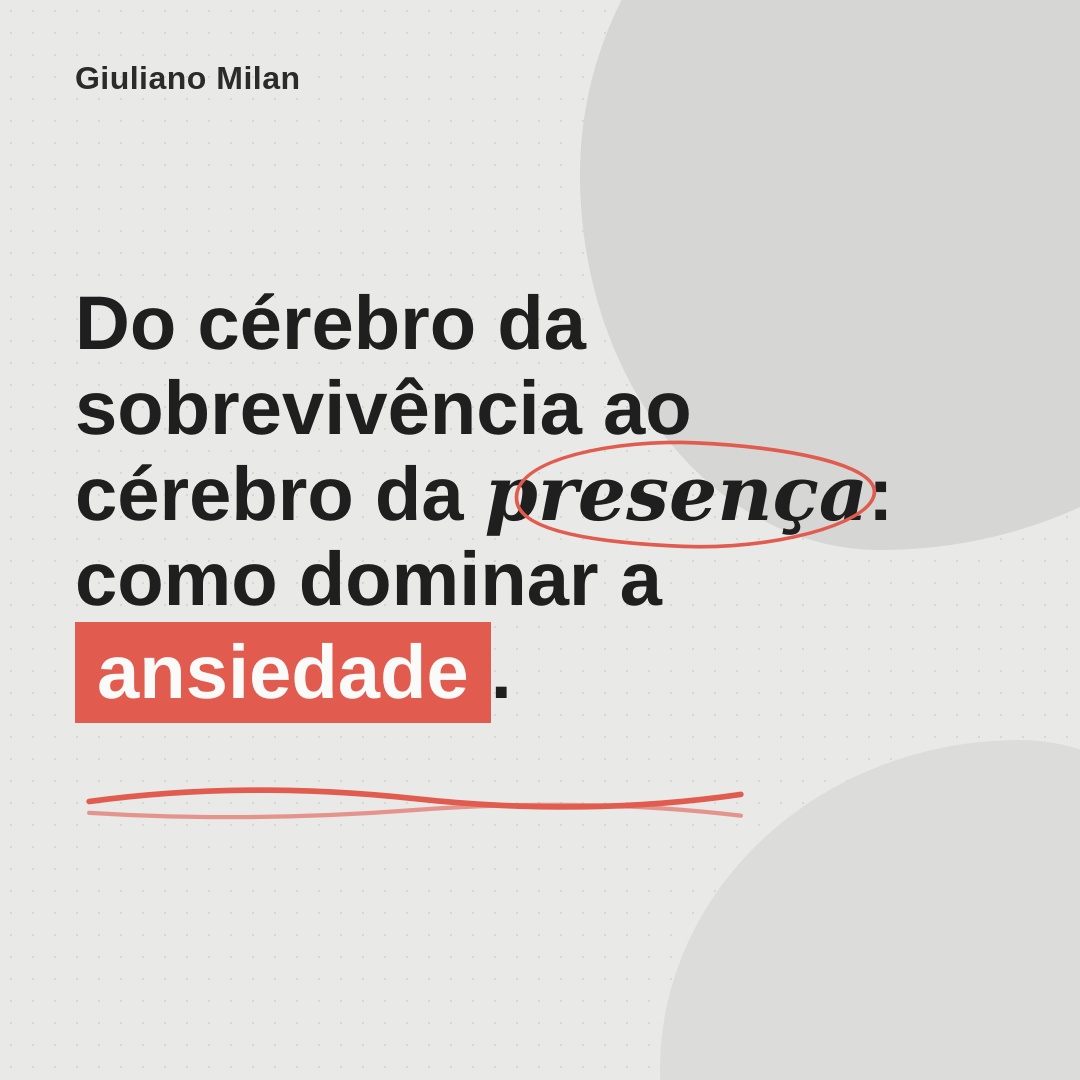
Every day, I am struck by how anxiety crosses racial, religious, and social boundaries. Panic attacks are becoming increasingly common across ages and social classes. I see this up close, including through friends who are psychiatrists and friends who work in hospital emergency departments. The number of people arriving at hospitals convinced they are having a heart attack is enormous. After triage and an electrocardiogram, they discover that it is a panic attack instead. They receive medication to help stabilize their heart rate and are then referred for psychotherapy, with medication support until they move through the crisis. World Health Organization data are alarming: generalized anxiety disorder has been rising rapidly. My field, meditation, is an important component of anxiety treatment alongside psychotherapy and medication. These three approaches complement one another. I see very consistent improvement in people who practice contemplation, not only meditation in the traditional sense, but a multidisciplinary approach that meaningfully reduces stress and anxiety. Stress and anxiety consume performance and quality of life. They put us into fight, flight, or freeze, very basic, instinctive responses that helped us survive and brought us this far, but are no longer suited to modern life. We no longer need to fight or flee a predator. We need to be more patient and compassionate with colleagues at work and with our children as we raise them. The central question is: how do we leave this survival state and enter what I call the presence brain? This is the brain of high performance, not only at work, but in life: quality of life, enjoyment, peace, and emotional security. It is where you can be your best self rather than your most instinctive and fearful self. Fear drives anxiety and stress, and it makes us shrink. A frightened animal becomes cornered and more reactive. Living through fear is like living with less vitality. That is why people are troubled not only by fear itself but also by the entire metabolic cascade it triggers in the body. Yet that discomfort is useful because it motivates us to move beyond that state. Moving beyond it takes effort, appropriate medication support when needed, a good psychiatrist, and a good psychotherapeutic process. This helps us understand how to manage stress internally and which decisions and choices might make our external lives less stressful. Some variables are beyond our control. We cannot change the world’s chaos or urban violence. But we can make choices, seek less crowded environments, pursue changes that may take years to materialize, reconsider a relationship that is a constant source of stress, or rethink how we raise our children. There are external and internal ways of managing this. My work focuses on the internal side: how you think about things, through meditation and contemplative practices adapted to modern life. These are small mental training exercises, a kind of everyday workout: quick, simple practices you can do with your eyes open, without attending a spiritual retreat or learning meditation in a temple. You can incorporate them into your routine as a parent, business owner, or employee, whatever your role in the world, and learn to manage enough pressure to keep the pressure cooker from erupting into an anxiety attack. The more we operate from the presence brain, and the less from survival and fear, the better our choices become. Good choices create a good life. Poor choices create a poor life. A difficult life does not appear out of nowhere; it results from choices that accumulate. Sometimes we need to make difficult choices, because good choices are often the hardest in the moment, while easy choices become the hardest over time because they take life in the wrong direction. Exercising is a difficult but good choice. Treating people well is sometimes a difficult but good choice. Turning off a dramatic, fear-filled series that puts you in an unhealthy emotional state is difficult. Watching a positive documentary or going to bed earlier so you can wake earlier are harder choices. Yet these are precisely the difficult choices that produce a good life. Easy choices rarely produce a better life. In the pursuit of a better quality of life, learning contemplative techniques, breathing exercises, visualization, and meditation is a very intelligent path. It is not the easiest choice, but it produces positive, sustained effects. I see it constantly: people who learn these practices often need less medication support and sometimes reduce their medication dosage, so powerful is the effect of applying these ancient contemplative practices to modern daily life. Giuliano MilanJul 14, 2026
The Presence Brain